Creative but Wrong

I have absolutely no clue who told me this, but someone not too long ago was talking about how they knew someone who knew most of the spots the cops would hide for speedtraps and slow down, but how they would, if anything, speed up in front of the police station, because they never patrolled there. It was one of those things that seemed ironic, and yet intuitively, I knew they were right.

But I’ve got my police scanner on right now. Care to guess where someone just got pulled over?

(Posting here since I can’t e-mail whoever mentioned this to me, since I don’t have the foggiest clue who it was.)

Guns & Crime

I’m in an odd minority: pretty liberal Democrats who support fairly lax gun laws. Of course, I’m hardly a crazy gun nut. I think the world would be a much better place without them, or at least with fewer. I support reasonable restrictions on gun ownership. (Such as being required to demonstrate gun safety, and not having been convicted of any violent crimes.) However, I hear a lot of pro-gun people asserting that more guns is the answer to solving crime especially in the issue of the charges for theft of a vehicle. According to expungement lawyers in Boston, they assert that a rural town like mine, where gun laws are very lax, will have considerably less crime because gun laws are lax. I think there are a lot of logical flaws in this argument, though: * I think it’s a chicken-and-egg problem, but with an answer. The rash of violent crimes came first, and the strict gun control was in response to it. I’m not saying it’s worked in reducing it. All I’m saying is that it’s not a case of people creating very strict gun laws in an area with no crime and then having violent crime develop as a result. * “More guns” seems to assume that the good guys will all go out and buy guns. I don’t know any bad guys, which means that everyone I know is a member of the “good guys.” Mr. T is the only person I know who owns a gun. Hundreds of other people I know, all of them the “good guys,” and none of them have bought guns, even though they could do so today if they wanted. * Lumping people into the “bad guys” and the “good guys” is, of course, a pretty silly way of viewing crime. Good people do bad things sometimes. My time writing police logs for the school newspaper, for example, saw many fights occurring over absurd issues. Like a huge fight between guys over a curling iron. They were all good people, but alcohol inhibited their, “What would I use a curling iron for?” instincts, along with their, “It’s silly to fight over this” sense. A society in which all of those people were carrying guns might not be a very rosy one. This says nothing of otherwise-good-people who get into violent fights with their spouses, or succumb to road rage, or so forth. * The other half of the assumption that more guns equals less crime is that, because anyone could be armed, bad guys won’t commit crimes, since they know they might get shot. But I’d guess that less than 5% of crimes in which a gun might help (e.g., robberies, rapes, assaults, carjackings…) are planned out in any great detail. It’s, “Hey, I’m bored and my car’s in the shop… Dude, a Jaguar, I’m gonna steal it.” There’s no, “What if he has a gun?” or “What if the police are in the area?” or “What if I get caught?” That’s why they’re committing crimes in the first place. Don’t get me wrong. I’m not arguing that we need to clamp down gun laws or anything of the sort. There are two different arguments one could make. The first is that, at least in some areas, overly-strict gun control laws have done nothing to curb violent crime, except to keep innocent people from being able to defend themselves. And I’d agree with that. Because the bad guys have guns, I insist on the right to have one, too. (Even if I don’t exercise this right.) But I don’t see any basis for the leap to, “If there were no gun laws, there would be less crime.” People will still commit crimes, even if there were absolutely no restrictions on guns. Maybe it’s just getting carried away with gun advocacy. Or maybe it’s confusing cause and effect. (I could argue that people become poor because they commit robberies, and the evidence would surely support that most people who commit robberies are, indeed, poor. Coincidence?) But whatever the case, it’s an argument that just doesn’t make sense to me.
The Good and The Bad

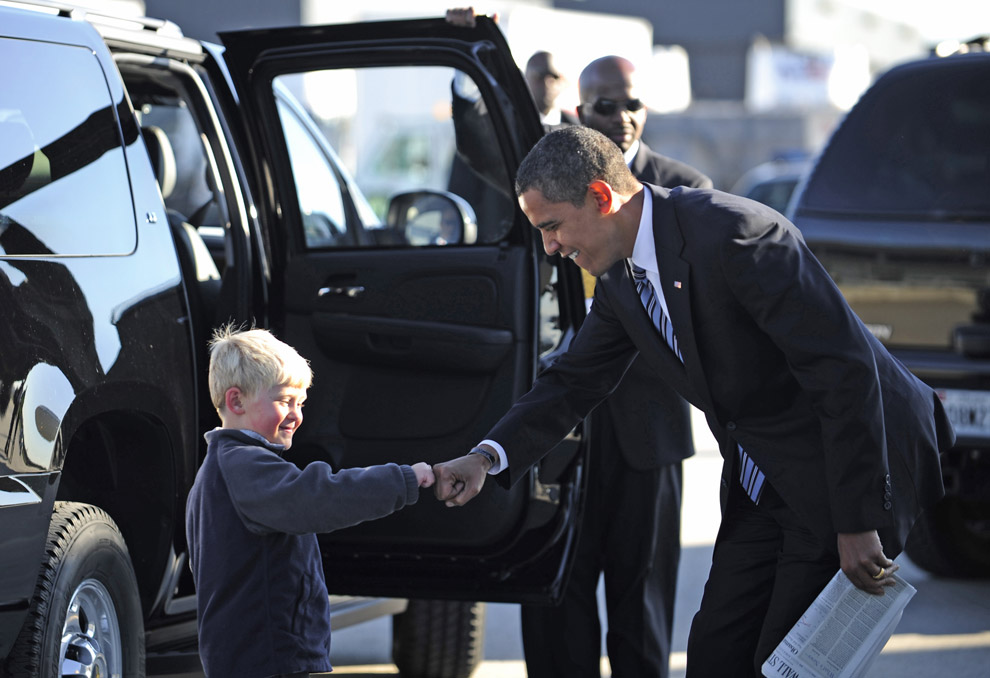
While I’m overjoyed with many of the election results: Obama won by a landslide, and NH has sent Shaheen to the house and re-elected its Democratic House members and Governor Lynch, there are a lot of interesting results to report on:

  • Washington (state) voted almost 60-40 to allow physician-assisted suicide for the terminally-ill.
  • By an even greater majority (63-37%), Michigan voted to allow medicinal marijuana. And apparently, Massachusetts also decriminalized the possession of under an ounce of marijuana. (Note that there’s an important distinction, though: marijuana is still illegal, but possession of under an ounce will get you a fine, not handcuffs.)
  • Nebraska voted to end affirmative action, almost 60-40. Colorado has a similar vote, which is extremely close right now.
  • In a close (53-47%) vote, Michican voted to allow stem-cell research.
  • In the highest disparity of the nationally-reported ballot initiatives, 70% of Massachusetts voters saw that Question 1, eliminating the state income tax, would have disastrous consequences and voted it down.
  • Homosexuals lost out big, with Florida, Arizona, and California voting to ban gay marriage in their state constitutions, and with Arkansas voting to ban homosexuals from adopting children. Curiously, 52% of California voters thought homosexuals had to be stopped, while only 48% thought minors having abortions had to be stopped; 56% of Arizona voters thought homosexuals had to be stopped, while only 41% thought that the hiring of illegal immigrants had to be stopped.

Oh, and the big surprise of the night? It looks as if Ted Stevens, the disgraced Alaskan senator, was re-elected by a hair. Most analysts predict that, when he returns to the Senate, he will pretty much be kicked out immediately, and then a special election will occur, in which Sarah Palin will likely win.

In Minnesota, Al Franken appears to have been defeated by 690 votes, out of 2.86 million votes, an 0.025% margin. Oregon is very close, too, but the votes are still being tallied. Thus Democrats didn’t get the 60 seats in the house Republicans were terrified of, so they’ll have to rely on having good ideas.

And ABC reports that Kenya has declared Thursday a national holiday in their country to celebrate Obama’s victory. The article on international perspectives also managed to interview the most stereotypical Italian ever. Described as “Drinking their coffees and cappuccinos” when interviewd, one Italian commented, “This is change. Not like that Bush. … Oh mamma mia.”

Trick or Treat

I have to wonder who thought it was a good idea to have their kids go around trick-or-treating. It’s normal these days, but given that “trick or treat” is, in and of itself a threat to commit (unspecified) mischievous acts if not given treats, it must have been outrageous at the time when people actually thought about the phrase to suggest that their kids go door-to-door threatening their neighbors?

Of course I’m not some crazy politically-correct wacko who thinks it should be banned. These days it’s normal. But at some point in time, it wasn’t, and people decided to make it a tradition for their kids.

Insanity Rising

In addition to my mom being aghast by her hair dresser urging her to, “Keep the White House white,” there’s other signs that this election isn’t about the issues. As I was pumping gas today, some guy came up to me, apparently after seeing my Obama magnet on the car, and starting talking about William Ayers. Since I wasn’t expecting to be barraged with assaults on my politician of choice, I was somewhat caught off guard and thus told him I didn’t want to speak with him.

What I should have said instead is that Obama and Ayers served on the board of a charity organization helping schools. And that Ayers was put there by a Republican who was a close friend of Ronald Reagan. And that Obama was 8 when Ayers was setting his bombs. And that Democrats and Republicans alike have praised Ayers’ more recent work. And that Obama has denounced what Ayers did 40 years ago. Or that Todd Palin was a member of a radical movement wanting to secede from the US, founded by a guy who “once professed his ‘hatred for the American government’ and cursed our ‘damn flag.'” (Or that Sarah Palin, this year, as governor, gave an address to the group.)

But it probably wouldn’t have mattered. I think a lot of people have their minds made up. (And honestly, that Sarah Palin’s husband once belonged to a radical political organization isn’t a big deal for me. Just like the fact that Obama managed a charity with a guy who was a domestic terrorist four decades ago isn’t a big deal.)

What annoys me isn’t just that people are talking about these absurdities instead of the real issues, like our collapsing economy, two ongoing wars, millions of Americans without healthcare, etc. And I’m not even particularly dismayed that people are basing their votes on little talking points instead of the issues. What really gets me is that the truth doesn’t factor in anywhere. Some people are going to cast their votes based on lies and smears they’ve had forwarded to them.