I’ve been thinking for a while about trying to do a lot of short posts here with links to things I happen across that are interesting. Let’s see how long I can keep this up.
While in Portland earlier this month on a business trip, we went to a restaurant where I had the most incredible steak frites of my life. (The restaurant was La Moule, whose restaurant has the same optical-illusion wallpaper as their site.) It was served a la Diane, a term I’d never heard before.
Fast forward a bit, and I happened across the Food Wishes series on YouTube. They’re short and drew me in. This is a bad introductory one because it’s one of the more complex recipes I’ve seen of his, but it turns out that Chef John has a video on how to make Steak Diane!
Because I’m always looking for an excuse to buy a new radio, I’ve been looking at the various VHF-and-up digital modes in use on the ham band. There are a multitude of them in use.
(To be clear, that is just on the 2-meter ham band in New England.)
Why DMR?
DMR drew my interest because it’s the most widely deployed in the region (NEDECN, etc.), by far. (More than the next two combined!) In part, this is probably because groups like NEDECN and EWARN, as well as the the international DMR-MARC group. They link up repeaters over the Internet (primarily, at least), making it a wide-area network. (This linking isn’t unique to DMR. It’s not even really relevant to DMR per se; it just happens that all or nearly all of the local DMR repeaters are linked. D-STAR repeaters are similarly configured from what I’ve seen.)
DMR is also interesting to me because it’s a two-slot TDMA system. Put more simply: in digitizing the user’s voice, it captures 60ms segments of voice from the microphone, converts them to digital format, and then transmits them in 30ms of airtime. Therefore, a single frequency can carry two conversations simultaneously. They’re dubbed slots, and many of the aforementioned ham repeaters will carry a local talkgroup on one slot and a larger-area one on the other. Users select which they want as if they were changing channels. (Another fun aspect of this: battery life is said to be improved about 40%, because the transmitter runs half as much.)
The other thing I think DMR has going for it is that it’s an open standard (ETSI) with a lot of commercial gear from a number of manufacturers. That serves to drive down cost a bit. DMR isn’t entirely unique here, but it seems to be the cheapest path.
As with some of the other digital modes, DMR supports things like one-to-one calls (though the operators of the networked ham repeaters ask that it not be used there) and sending of text messages / data.
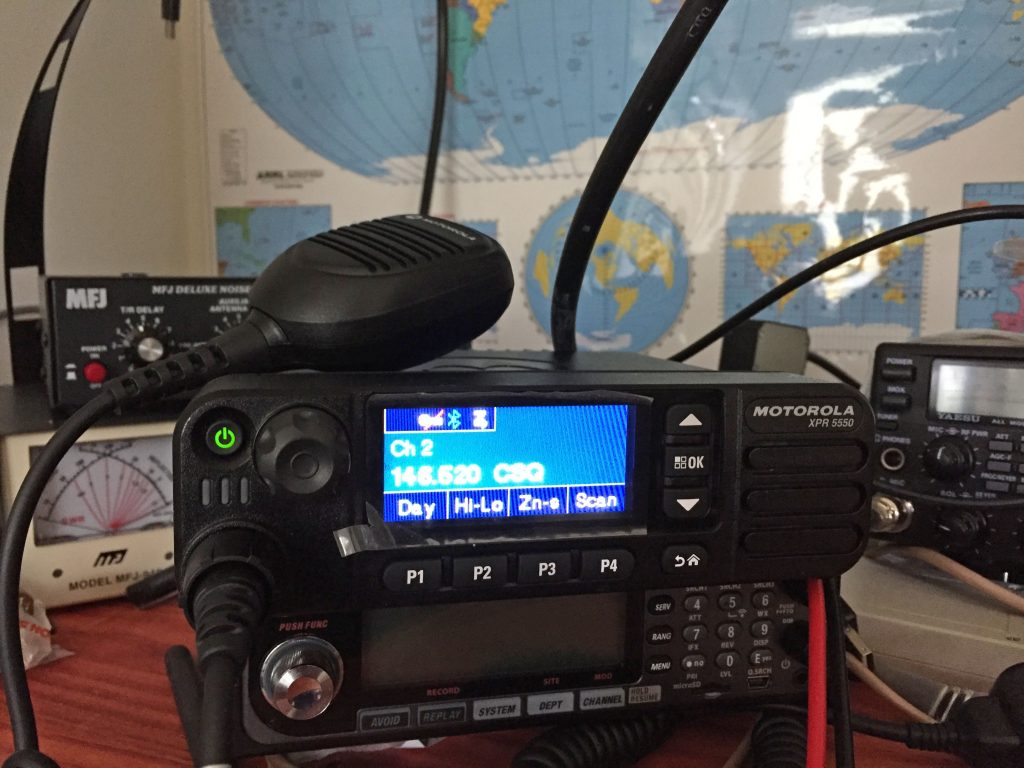
So, I decided to jump in, and ordered a radio off eBay:
It’s a Motorola XPR 5550, VHF. Interestingly, it also has a dedicated GPS receiver built in.
I’m now onto my next challenge: obtaining the programming software (CPS) for the thing. Because it’s a commercial radio versus something targeted at hams, it’s not easily programmed. (FCC Part 90 regulations intentional forbid allowing users to enter their own frequencies, for example, since in many cases that would wreak havoc.) For some reason, Motorola insists on selling the software through Motorola Online (MOL), which requires that you request an account and wait days for it to be manually provisioned. They also, frustratingly, charge close to $300 for it.
The software is floating out there for illicit download, but I want to do this right. Also, this being a newer commercial rig, it only supports “narrowband” 12.5 kHz channel spacing out of the box. Ham radio has not narrowbanded, so this is undesirable. Motorola offers a free “entitlement” to enable legacy 25 kHz channel spacing, but getting it apparently requires an active CPS subscription.
So for now, this really slick digital radio sits on my desk, monitoring the pre-programmed 146.52 2-meter calling frequency, in analog FM. I can’t wait to get this to do a bit more!
Being a radio nerd who’s trying to spend more time outdoors, I’ve figured out a good way to kill two birds with one stone: hiking up hills with radio towers on them. Since the towers tend to be atop hills or mountains overlooking the surrounding community, they often have pretty scenic views.
Today was an almost completely cloudless day, so I decided to cross Baldpate Hill in Georgetown, MA off my list. (Note that the cover image on that page is not from Baldpate! I was disappointed.) I never did find the “fire road” on Spofford Street; I’m pretty sure it does not exist. The only way I’m aware of to get where I went—plainly the same place on the map as that site depicts—is via an access road on Baldpate Street just before Baldpate Hospital.
I expected a fairly scenic summit with panoramic views, but it was nothing of the sort. Baldpate has dense foliage, and lots of poison ivy that discourages you from venturing off-trail. (And by trail, I mean the dirt road.) Really all there is to see are a few towers and some plants.
I did pass this guy walking up the trail:
Backlit spider’s web
This Jack in the Pulpit blends in well, emulating poison ivy’s distinctive leaves a lot more closely than I realized:
Jack-in-the-Pulpit plant
Walking up the access road, the first thing you come to is a grassy clearing with a couple large water towers:
Water towers atop Baldpate Hill
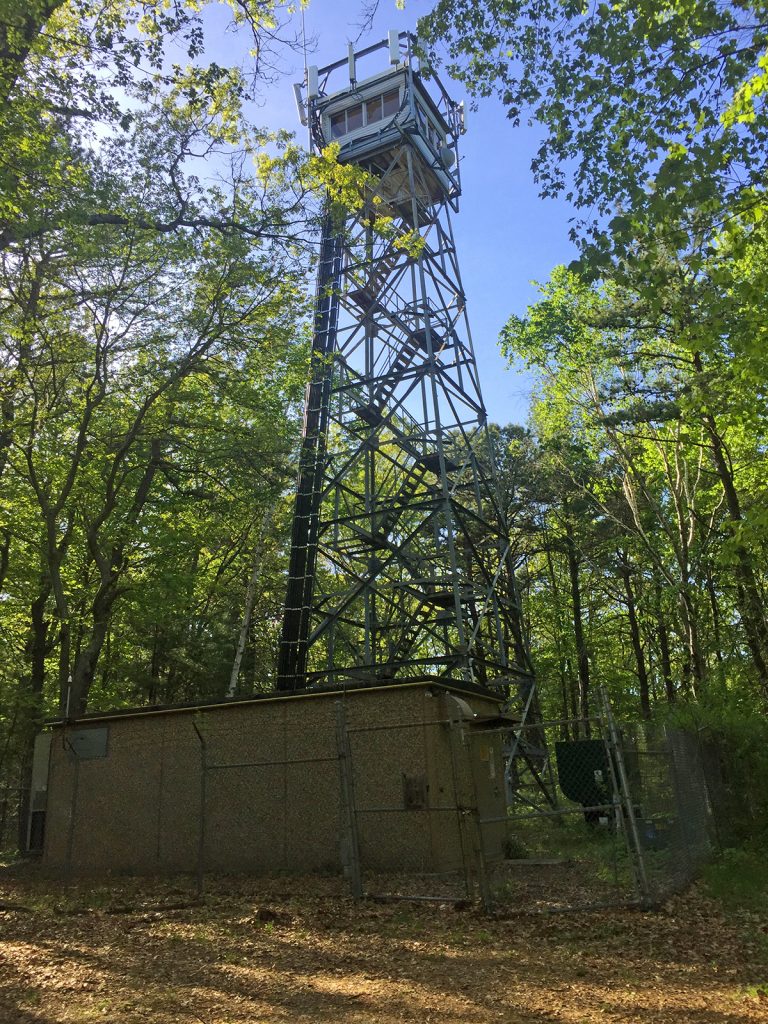
At the top of the hill, you come to a fire tower:
A fire tower atop Baldpate Hill converted into a cell tower.
At least, it was a fire tower. It’s now fenced in and loaded up with cellular antennas. I should have grabbed a picture of the feedline; though I knew they used low-loss coax due to the high frequency and low-power handsets they’re trying to receive, I guess I never really appreciated multi-inch-thick coax until I saw it in person.
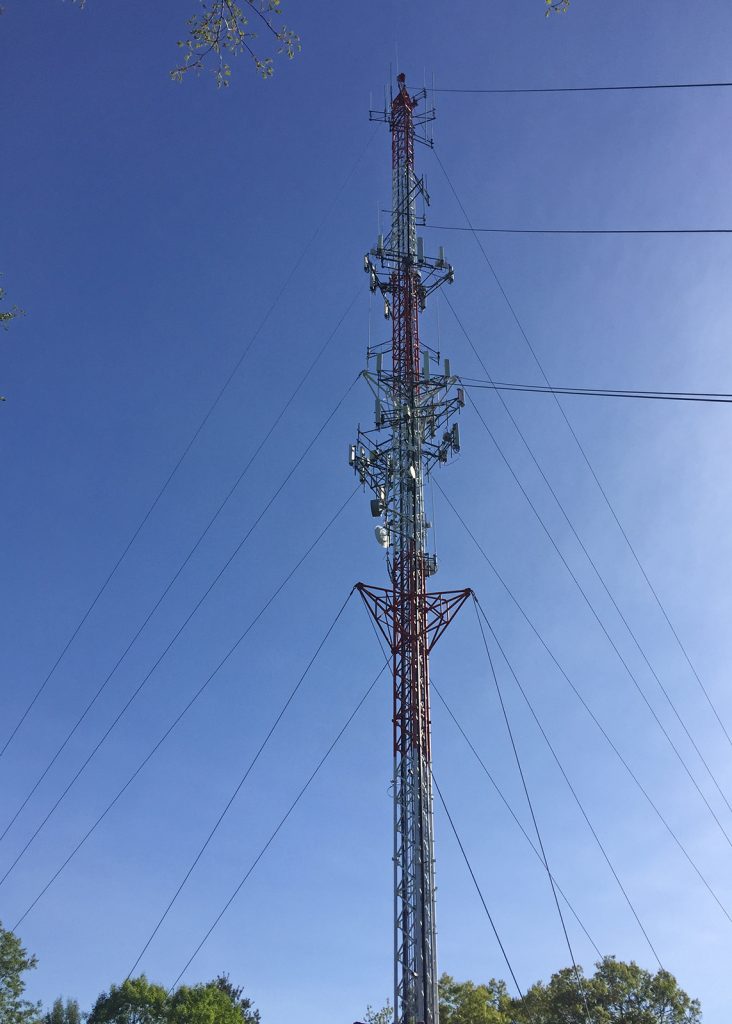
Between the “fire tower” and the water towers lies the communications tower. It’s about 250′ tall, and posted as ASR 1004094.
ASR 1004094, an 80m tall tower atop Baldpate Hill in Georgetown.
The tower is listed as being owned by New Hampshire Public Broadcasting, which is odd because, as far as I can tell, they have no presence on the tower. It looks like it’s just cellular, land-mobile, and microwave.
Some licenses near the top of the tower list a height above average terrain (HAAT) of about 450′, so the hilltop itself must be about 200′ above average terrain. With the tree cover, though, there’s nothing really to see. I do wonder what the views from the fire tower would be like if it were open.
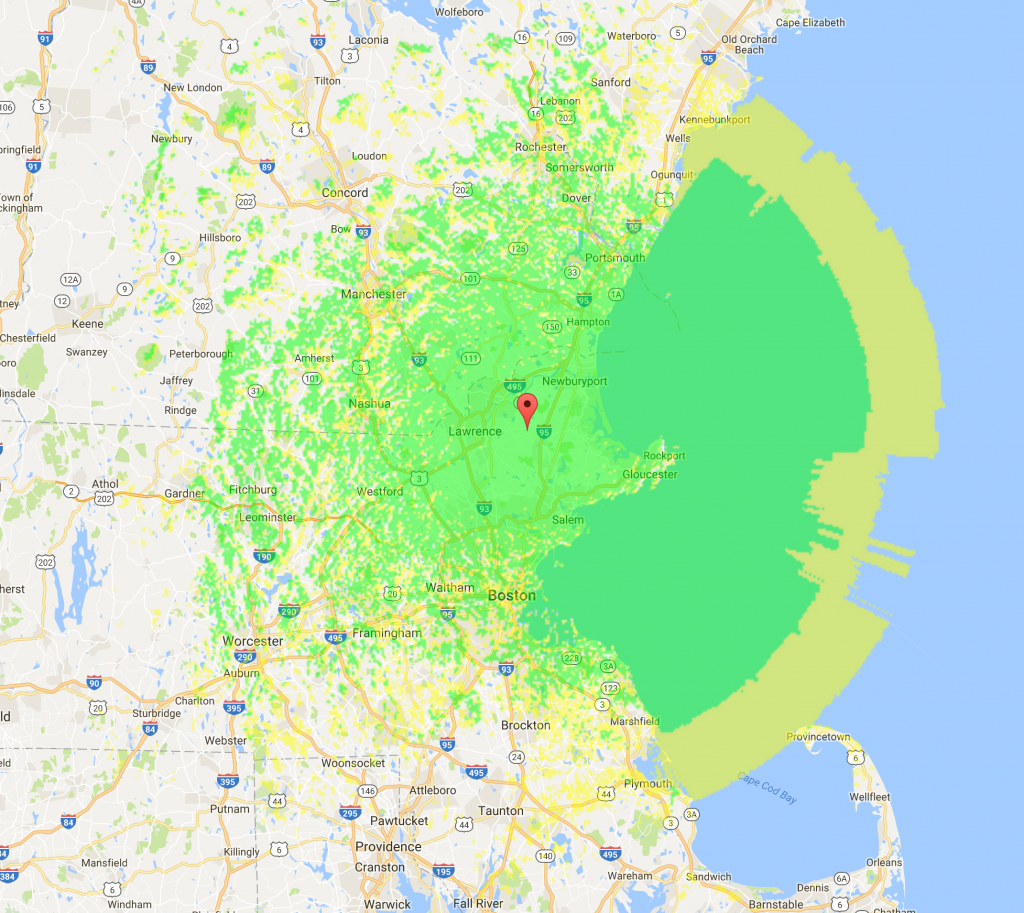
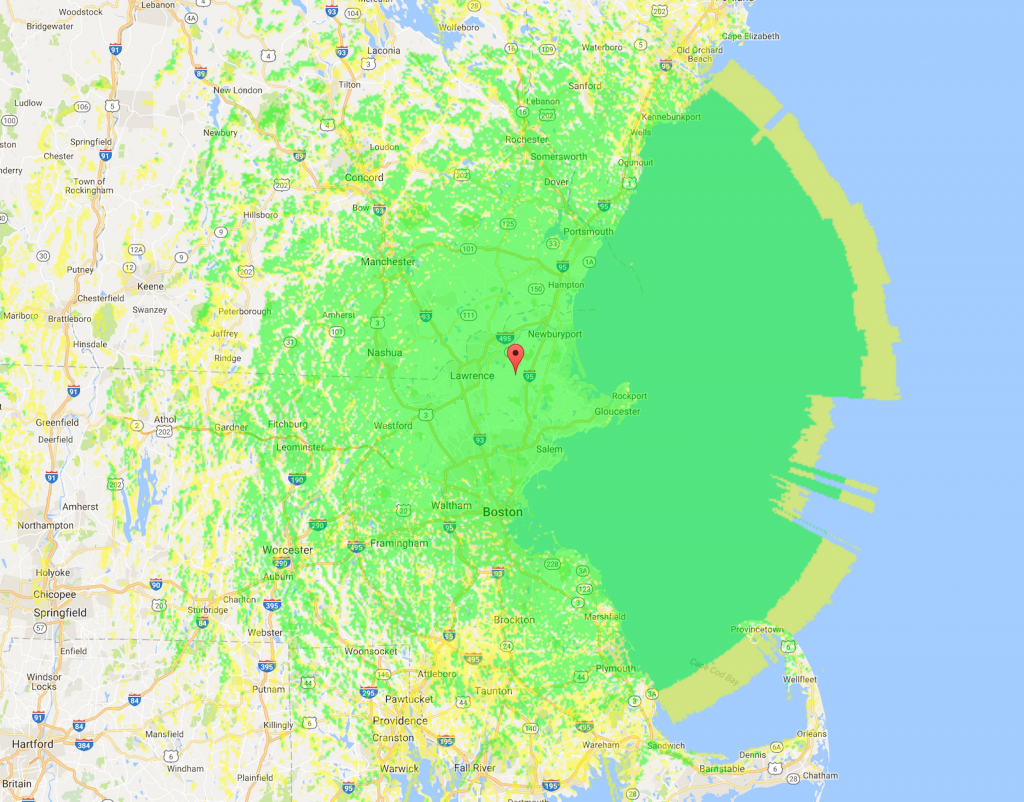
Playing with the excellent Radio Mobile Online, here are projected coverage maps from the site. There are, tragically, no ham repeaters up there to the best of my knowledge, but here’s what coverage would look like.
Both maps are based on being almost at the top of the tower (80 meters), 30W out of the transmitter, 1.5 dB loss, and 6 dBi antenna gain, for about 85W ERP. Modeled for 70% reliability.
Much of the stuff actually on the tower appears to be T-band and 900 MHz SMR/LMR, though a lot of it is licensed for 300W – 1kW ERP. Other tenants, according to the FCC database, include Georgetown and Boxford public safety, Northeast CMED, an ambulance provider, and a few others.
BTW: I failed to bring my “real” camera along, but was pleasantly surprised by what the iPhone camera could do. I used Photoshop to lighten up the shadows on the tower photos, but otherwise these are straight out of a cameraphone.
Pepper spray has been legal in Massachusetts without any sort of permit required for a few years now. It’s also known as OC spray, from the extracted oleoresin capsicum, being an oleoresin formed from capsicum, the ingredient that makes hot peppers spicy.
I recently picked some up, and would like to share a few things I’ve learned.
Where to buy pepper spray
Finding pepper spray in MA can be hard. I’ve seen it in lots of places across the border in New Hampshire, but it’s hard to find in Massachusetts. Making it worse, shipping it to Massachusetts is either prohibited, or thought by online merchants like Amazon to be prohibited. I ended up picking mine up in a sporting/gun shop.
Why all the numbers are meaningless
But here’s the part that really trips me up: the ratings. The spray I purchased is listed as “10% OC (2 million SHU).” Intuitively, I assumed this meant that it was 10% of the maximum strength possible. (If 10% is 2 million SHU, the maximum must be 20 million SHU.) But this is totally wrong! The SHU rating or the percentage alone are meaningless numbers.
What this actually means is this:
The solution in the canister is 10% oleoresin capsicum, and 90% other stuff (inert ingredients). If this number were 100%, I assume it would be a sticky goop that you couldn’t spray, so it’s necessary that a decent percentage of the contents be something like water or propylene glycol.
The OC that’s in the spray is rated at 2 million Scoville heat units (SHU).
As an analogy: you have a rum and Coke, which is about 25% rum and 75% Coke. The rum used is 80-proof, or 40% alcohol. If your goal is to get drunk, neither of those metrics is meaningful on its own. 25% rum doesn’t necessarily tell you how strong the alcohol is, and “The rum in this Coke is 100 proof!” isn’t good news if they only put a dollop of it in your drink. What you’d actually want to know is the total amount of alcohol.
The same is true of OC spray. Sabre, one manufacturer of pepper spray, has a blog post explaining that you need to consider the product of the two numbers, known as the percentage of Major Capsaicinoids, or MC. The same math is discussed in a number of places; the Sabre blog post is just the first place I saw the math given a name.
Pure capsaicin is 16 million Scoville heat units. So if the oleoresin capsicum in my canister of pepper spray is 2 million SHU, it’s 2/16 = 12.5% of the maximum strength.
But only 10% of the canister is OC, so it’s 12.5% × 10% = 1.25% MC. (Well, the Sabre article uses the same starting numbers to arrive at 1.33%. I’ll assume that I’m the one that’s off on the math.)
A competing product is marketed as 6% and 3 million SHU. That’s 18.7% × 6% = 1.122% MC. Other sources have higher SHU ratings at lower percentages. This all gets very confusing, because manufacturers seem to just decide whether they want to market their product on having a high-percentage of OC, or on a high SHU number. You need to compare the total percentage of capsicum if you want to do any sort of meaningful comparison.
Cleanup
If you’re going to carry pepper spray, you would probably do well to also carry something like these decontamination wipes to help alleviate the effects, in case you end up getting some of the spray as well. (There are a few other products linked from there as well. Having never used any of them, I can’t recommend one over the other. All I can say is that Sudecon wipes fit in my glovebox nicely.)
Related compounds (science nerds take note!)
As mentioned above, the “active ingredient” in hot peppers is capsaicin. Pure capsaicin is 16 million Scoville heat units. The hottest pepper is the Carolina Reaper, around 1.5 million SHU. (You should definitely not vape it.)
However, capsaicin isn’t the hottest compound. That honor appears to belong to something even tougher to pronounce, Resiniferatoxin. Found naturally in a plant known as Euphorbia poissonii (what could be scary about a plant whose Latin name is poissonii?), Wikipedia writes that it “causes severe burning pain in sub-microgram (less than 1/1,000,000th of a gram) quantities when ingested orally.”
All of these compounds seem to act on a receptor in the body known as TRPV1, which controls body temperature and “provides a sensation of scalding heat and pain.” There’s also a compound known as capsazepine which inhibits the TRPV1 channel, effectively blocking the effects of capsaicin and its ilk. I’m yet to see it being marketed as an antidote to pepper spray, though.
I’ve just completed a server move, and the site should be back in business.
The old setup was a beefy server in my basement with 24GB RAM and eight cores. But access was via a jenky IPv6 connection over my cable modem, with external access via a varnish instance running at Digital Ocean. Something in my home network configuration causes that to be extremely unreliable, taking the site offline for days.
It’s now running on an AWS instance, which I hope to make an auto-scaling group. Actual content resides on an EFS volume, which is surprisingly performant. And it’s all behind a new application-style ELB, which also supports HTTPS and HTTP/2.
For now, I am using neither varnish nor a CDN, to see how it goes. Access is directly to the ELB, with every page hitting Apache. WP Super Cache should keep things pretty performant with any luck.
Most normal people will probably never even know this is a thing, but Chrome (and other browsers, really) keeps its own in-memory DNS cache, separate from what the OS keeps. For normal use, this is undoubtedly an improvement.
But every now and then, this can be a burden, and Chrome will have cached something you don’t want it to. For example, you make a change in /etc/hosts to hit a development server bypassing its load balancer or the like, but Chrome has already cached the IP, and thus the hosts change isn’t picked up.
It turns out that you can totally flush this cache—and view its contents. Just pay a visit to chrome://net-internals/#dns and voila! A listing of cache entires, and a “Clear host cache” button. (It also provides a look at how many optimistic DNS queries Chrome performs: many of the entries seem to be unvisited links on sites you’ve visited.)
The latest? What exactly constitutes a millennial? And what’s all that Gen X/Y business?
It turns out that there’s actually not broad consensus on exactly what the date are, but they look something like this:
Generation Name
Birthdate Range
Silent Generation
1925-1945
Baby Boomers
1946-1964
Generation X
1965-1979
Millennials / Generation Y
1980-1996
Generation Z
1997—Present
They tend to run 15-20 years, which means we’re around the time for needing a new term for those post Generation Z.
Also interesting to me: at the time of this writing, “millennials” are between 20 and 36 years old. I’ve taken a lot of the “kids these days” complaints about millennials to refer to teens, which would more accurately be Generation Z. Ironically, those born on or after 2000 are not millennials. (I used to assume the term referred to those born this millennium.)
For the purposes of this list, “Western world” can be taken to mean North America, Europe, South America, and Oceania. However, it should also be noted that many variations may exist within the regions, both geographically and culturally, which mean that the list is broadly indicative, but necessarily very general.
It seems that virtually no one agrees on exactly where a generation ends or begins, so you’ll see several years of variation depending on the source.
For a while now I’ve read about software-defined radio (SDR), but as an academic pursuit, or as something very expensive. It turns out that I was way misinformed, and you can get in on the fun for $25 ro so as long as you have a computer with a USB port.
As the story goes, tuners like these were originally cheap USB TV tuners. They cut costs by doing much of the processing in software instead of hardware. And, well, that’s software-defined radio! The fact that they were TV tuners had some other nice effects: the TV bands are all over the place, and each TV signal is a few MHz wide, so these are in fact broadband SDRs capable of capturing a couple MHz of spectrum concurrently. And that’s awesome for us!
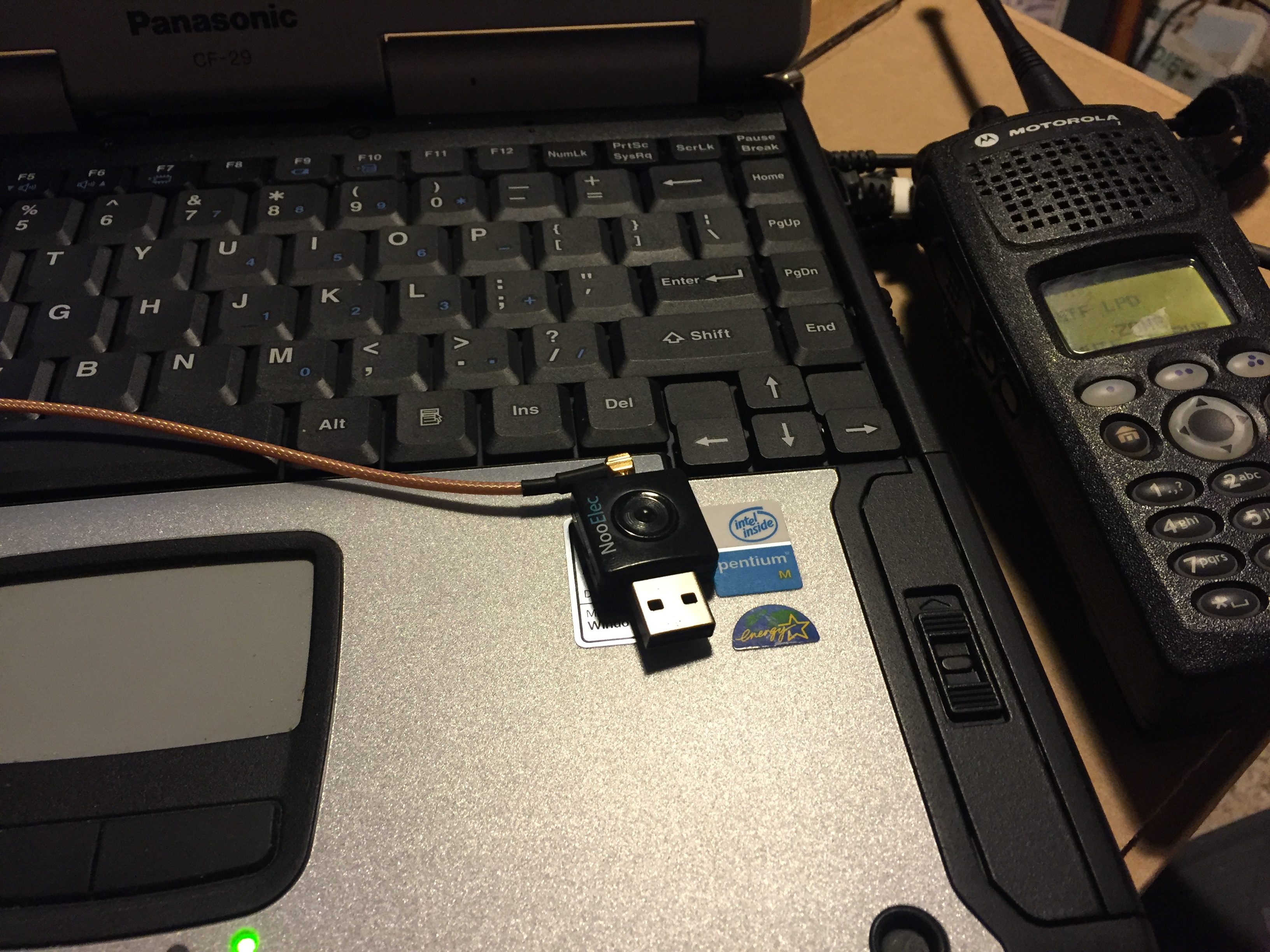
Here’s the one I have; the specific model is no longer made, but it uses the same R820T tuner that current models support:
On Linux I use rtl_fm for tuning, but on Windows, I use SDR Sharp. And on the Mac, I use gqrx, also available on Linux.
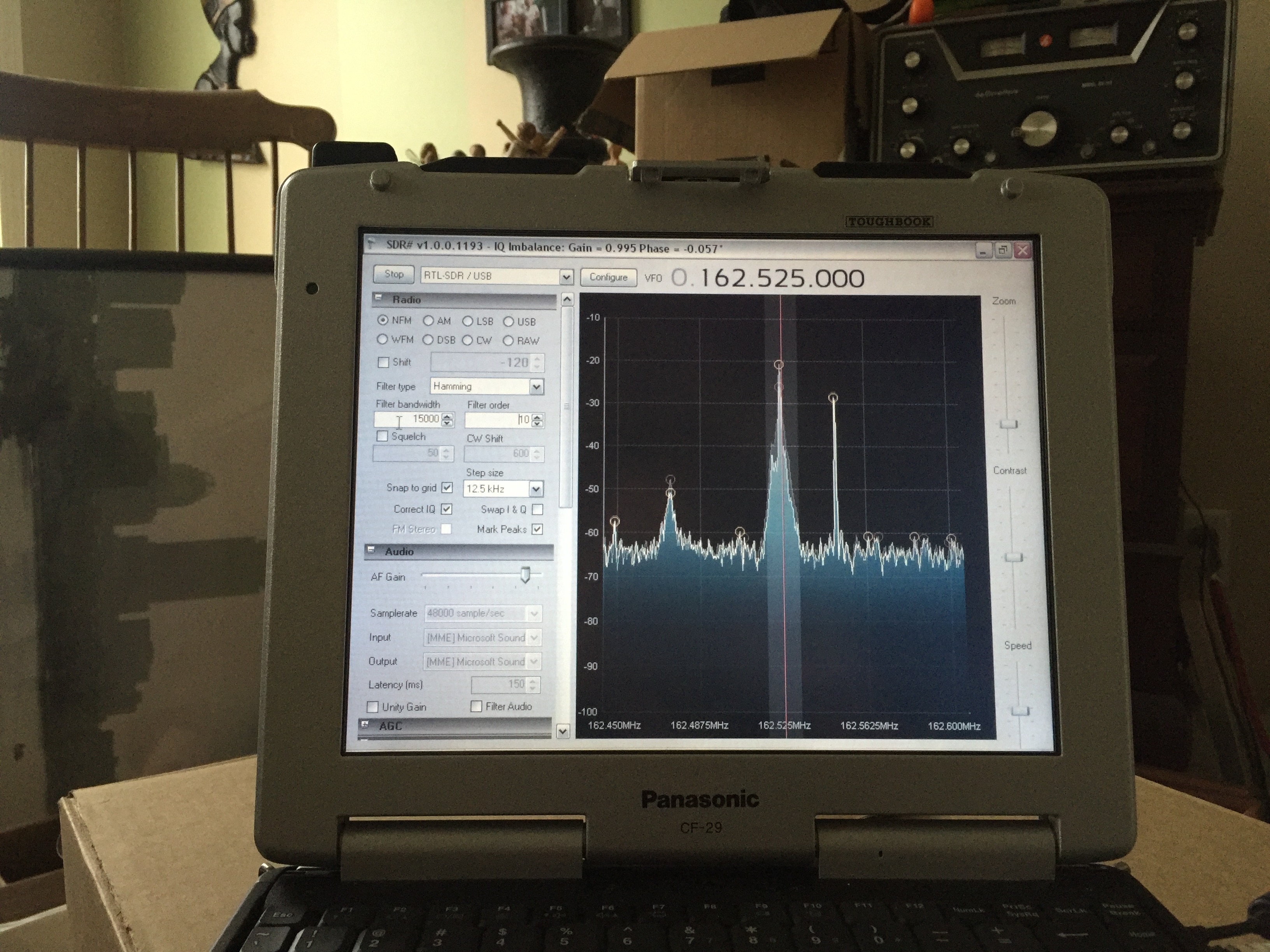
Here it is in action:
(Sorry for the photograph of a computer screen. That’s my old radio-programming laptop that needs to stay on Windows XP, so I intentionally keep it off the Internet.)
You can see it’s tuned to 162.525, which is WNG575, my nearest NOAA weather radio station. SDR Sharp is giving us a spectrum scope view, which is pretty handy.
The receiver has adjustable gain, from 0 to about 47 dB. It’s not abundantly clear to me how this relates to regular receivers; it seems like the 0 dB setting is pretty deaf compared to most of my other radios, but at 47 dB it’s definitely got some gain on the others. The spectrum scope is especially useful for seeing the effects of gain, though: as you increase gain, the noise floor goes right on up with the signal. (This is, of course, not surprising, but it’s a great visual explanation of why you don’t always want a powerful preamp.)
With the scope, you can see that, with the gain turned up, the noise floor is sitting around -65 dBm, while the weather station is up at -20 dBm. Nearly as strong off to the right is 162.55, WXL93 out of Paxton. (You’ll also see 162.475, KHB35 in Boston; as well as, much weaker, 162.45, which is KZZ40 on Saddleback Mountain in NH.)
You’re probably not particularly interested in which weather stations I can receive, but the spectrum view is quite handy.
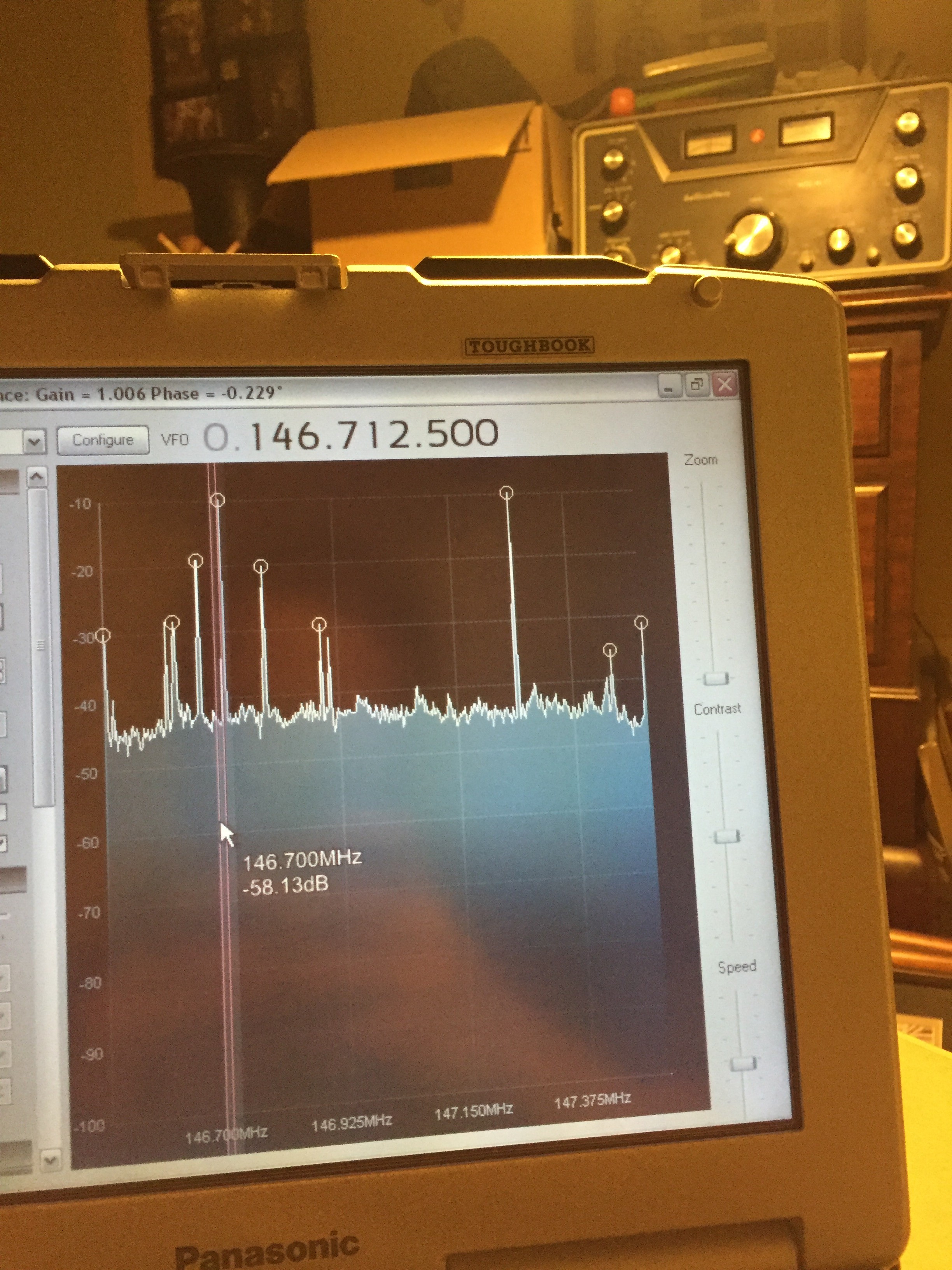
And here it is during a linked traffic net on the ham bands:
With the GP-15 I just put up, I’m seeing a number of area repeaters active — plus some noise!
The thing isn’t perfect. As an extremely wideband receiver that is so small that I could literally swallow it, it seems to suffer a bit more than other receivers with strong noise and intermod. I receive ghosts of signals in odd places on the band, seemingly related to the bandwidth I sample: at the 0.25 Msps mode, I often see images duplicated 1 MHz off their true frequency. The 0.9 MHz view is more confusing. But, for the cost, and the features that a receiver costing 20x as much doesn’t offer, I’m willing to put up with that.
Oh, it also gets kind of hot, especially as you crank the gain up:
SeekwareBlendModeNone
That also points to another problem, in that it often has some frequency error, which seems to vary a bit with temperature. I’ll often have to dial in about 30 ppm correction, and then back off that as it warms up. But, like the performance in noisy environments, that’s a problem I can put up with.
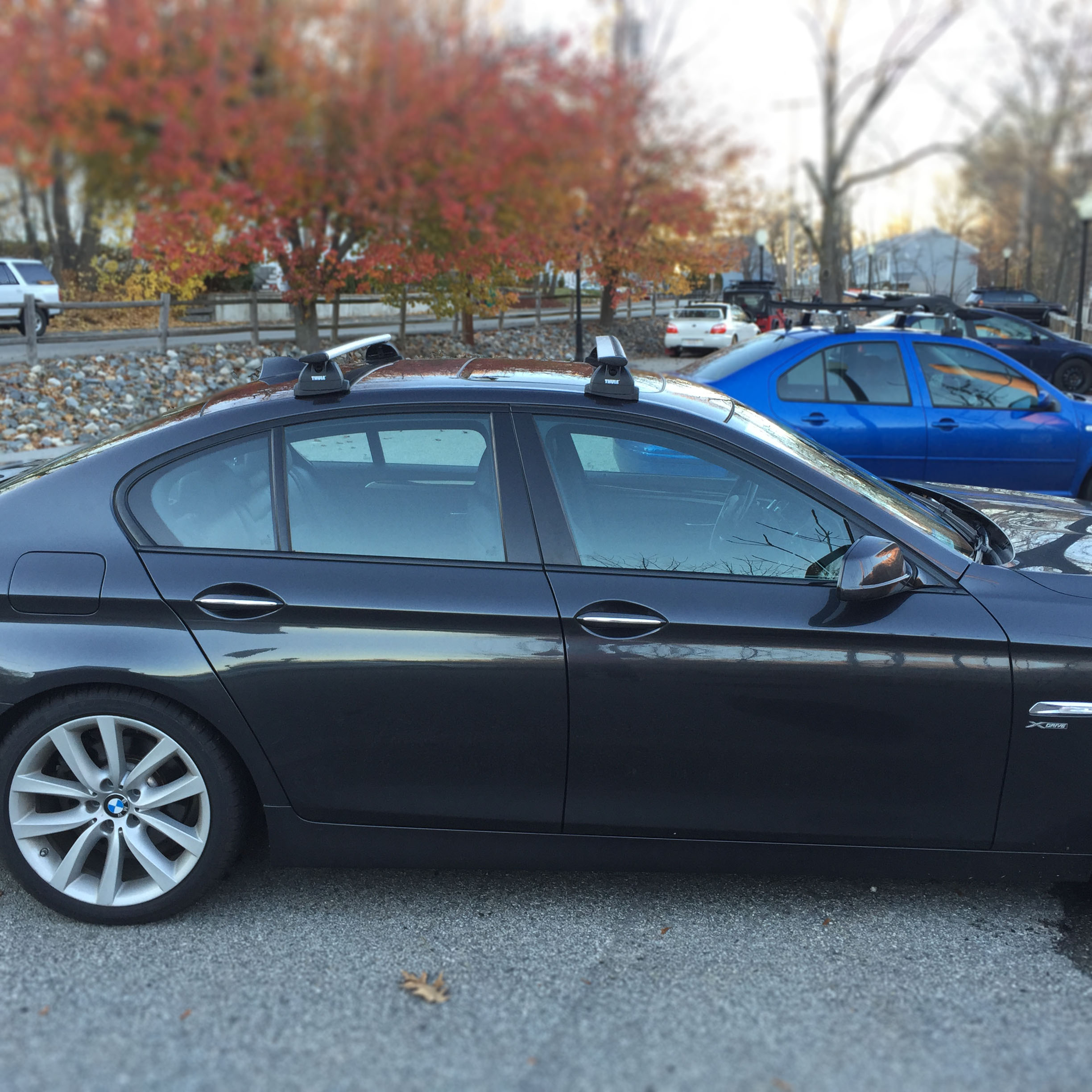
My loving relatives gifted me an Thule AeroBlade roofrack, to celebrate me turning really old and also no longer having a car large enough to shove a Christmas tree in the back of. I figured I’d document the process, for my sanity when I go to repeat this next year, and for anyone else who’s looking at installing these.
Equipment
My car’s a 2012 BMW 535i, a member of the “F10” series/class. I believe all of the 2010/2011 and newer 5-series cars will fit into that category. The Thule assembly for this model came in three separate boxes:
ARB47, Thule AeroBlade, 47″, “load bars” — the actual roof rack bars.
460R, Rapid Podium, the base onto which the load bars attach
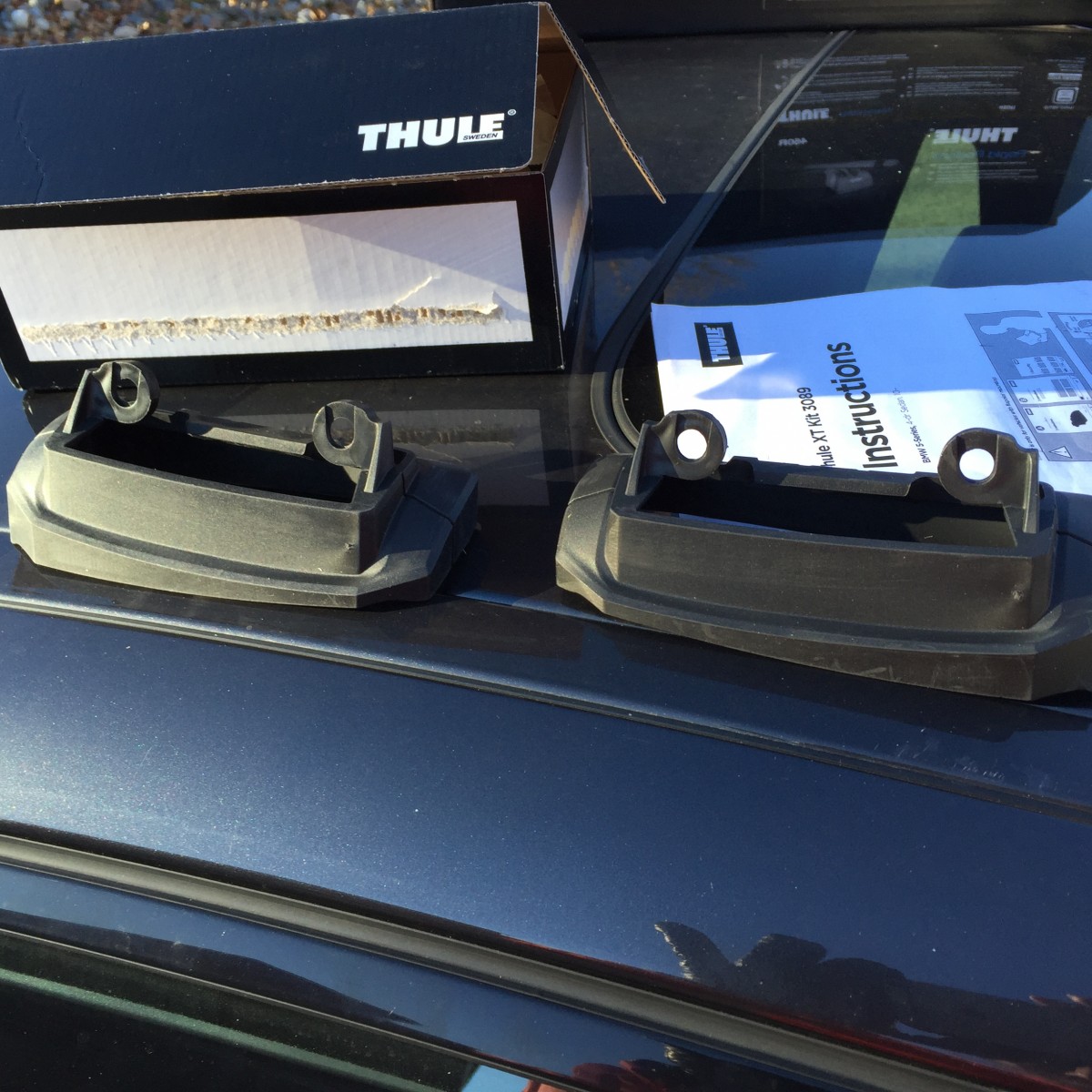
Kit 3089, the vehicle-specific kit for securing to the roof.
Going wrong
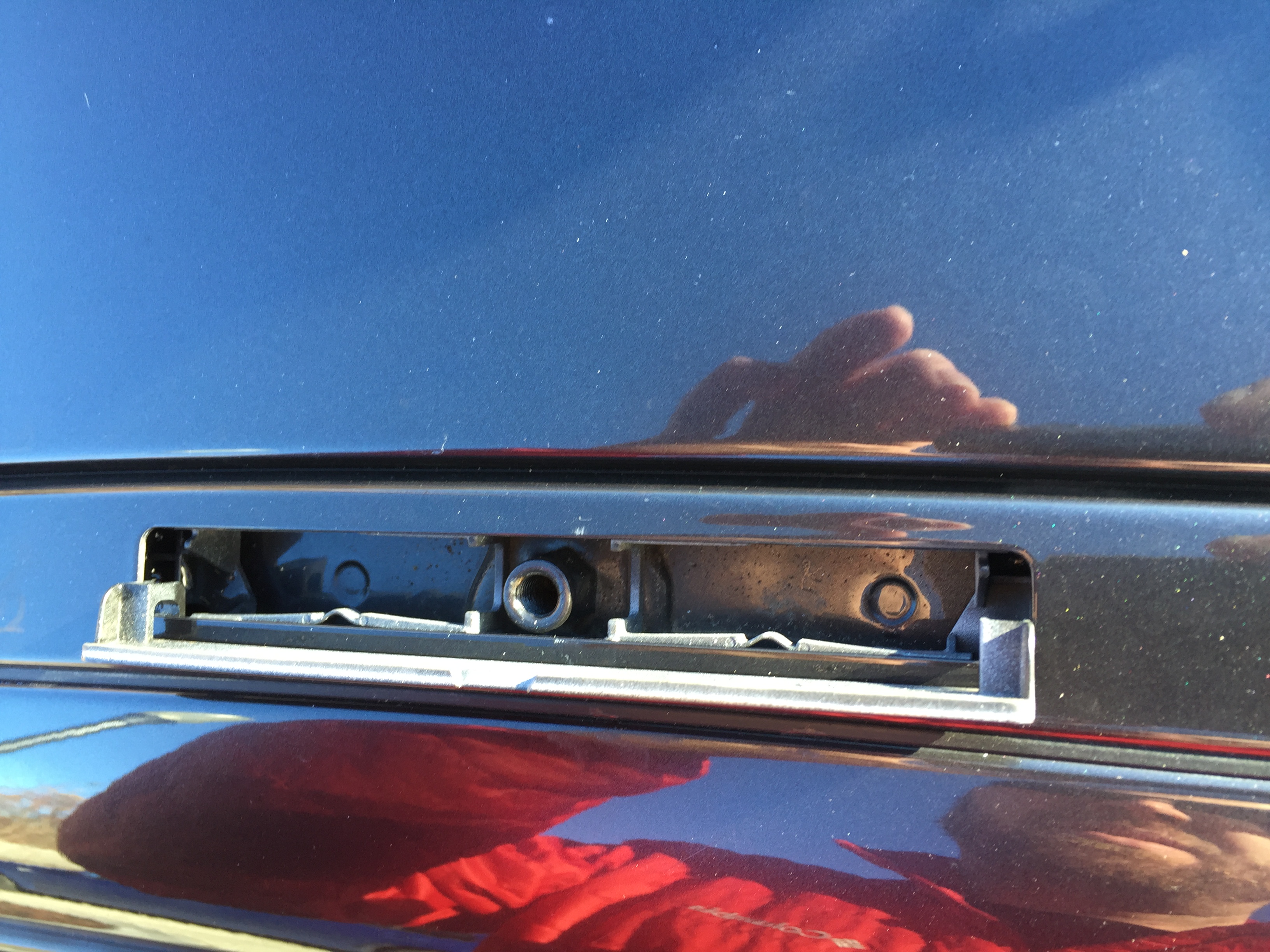
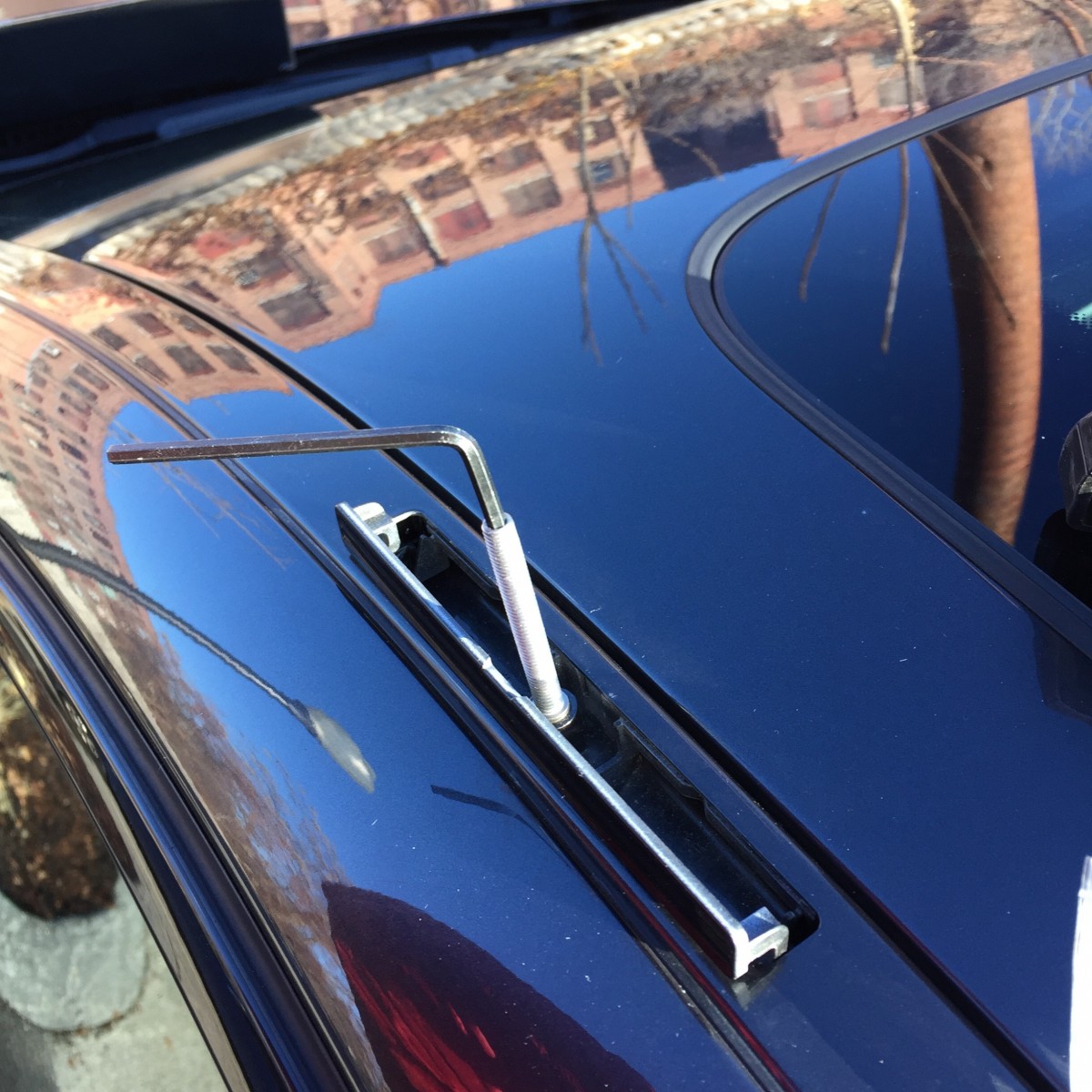
Because I’m a guy, I started by assuming I didn’t need the directions. I mean, how hard can it be? The car even has these flip-up mounting points:
They pop up like so, revealing slots you can screw into.
My plans were quickly foiled when I realized I hadn’t even started with the right box of equipment. Apparently, there’s a reason they include the instructions.
Overall plan of attack
What was totally unclear to me when I was figuring all of this out is that you really can’t just do one box at a time. You can mostly install the vehicle-specific kit first, but then you start needing to meld the other kits together.
The rest of the post will go into much more detail, but you’re going to want to accomplish the following.
First, you’ll install the vehicle-specific mounting kit, “Kit 3089” in this case. This will leave you posts the rest attaches to:
Then, you’re going to want to assemble the AeroBlades, and loosely secure them to the “Rapid Podium”:
Finally, you’ll attach that whole mix to the mounting kit you bolted to the car in the first step.
Car Mounting Kit
Have you ever assembled something from Ikea? You know how the illustrations give you a vague sense of what you want to accomplish, but don’t quite tell you how to get there? That’s how I felt the whole time I was doing this, and then I realized that Thule and Ikea are both Swedish companies. Having a little Swedish ancestry was insufficient to intuit what they meant some of the time.
First, screw these bolts into each of the four mounting points on the roof. The mounting point covers on the BMW swivel up to reveal the sockets, but don’t come off. That’s fine; you don’t need them to. One end of the bolt is wider in a small section; that’s the bit that goes into the roof screw-holes.
If the bolts aren’t going in, that’s fine. They include a die that you can use to perfect the threads:
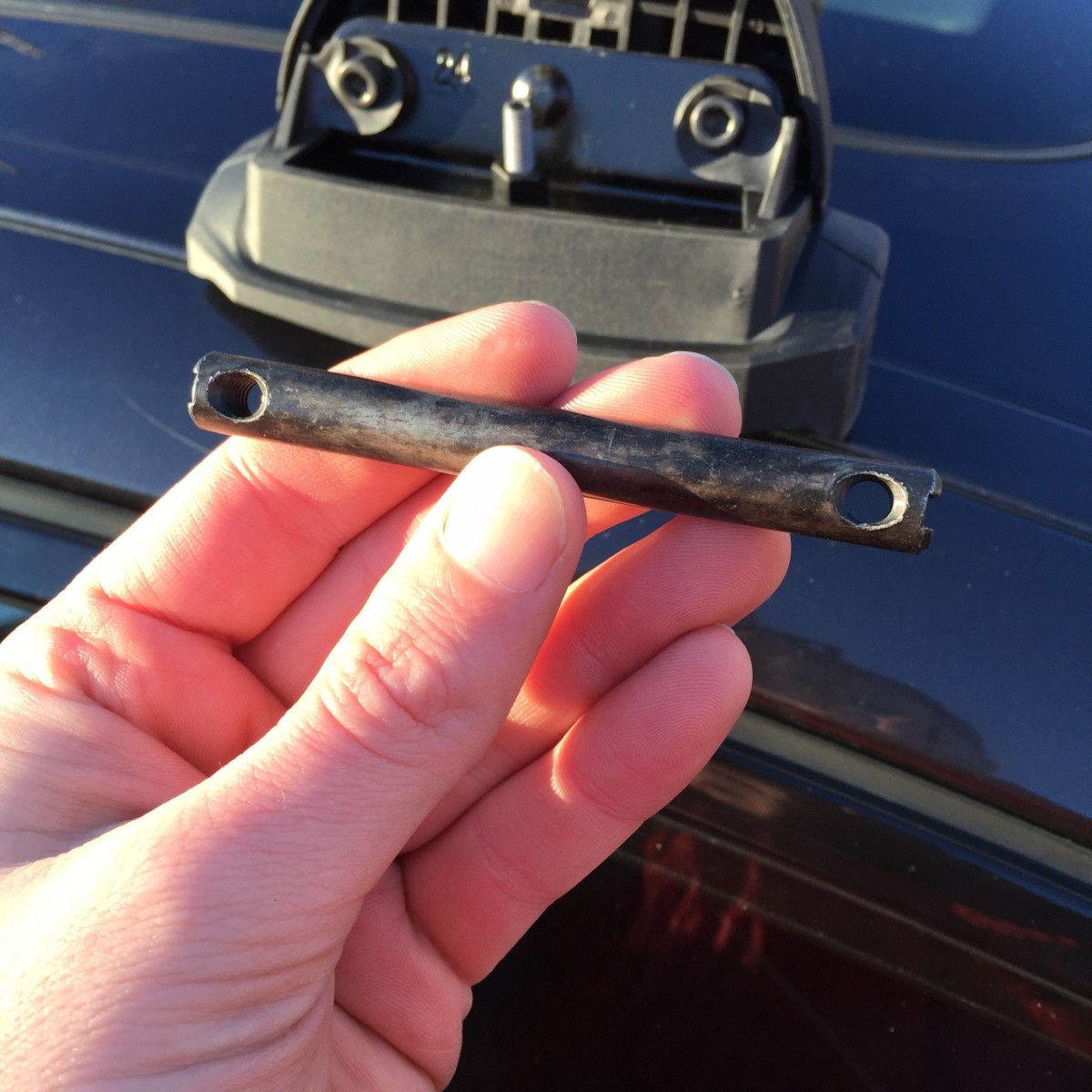
You screw that in with a larger 5mm hex bit, and then unscrew it, leaving pristine threads. I didn’t see a 5mm bit in the box, but there was one in the Rapid Podium box. That die is only to fix the threads; it doesn’t stay in the car.
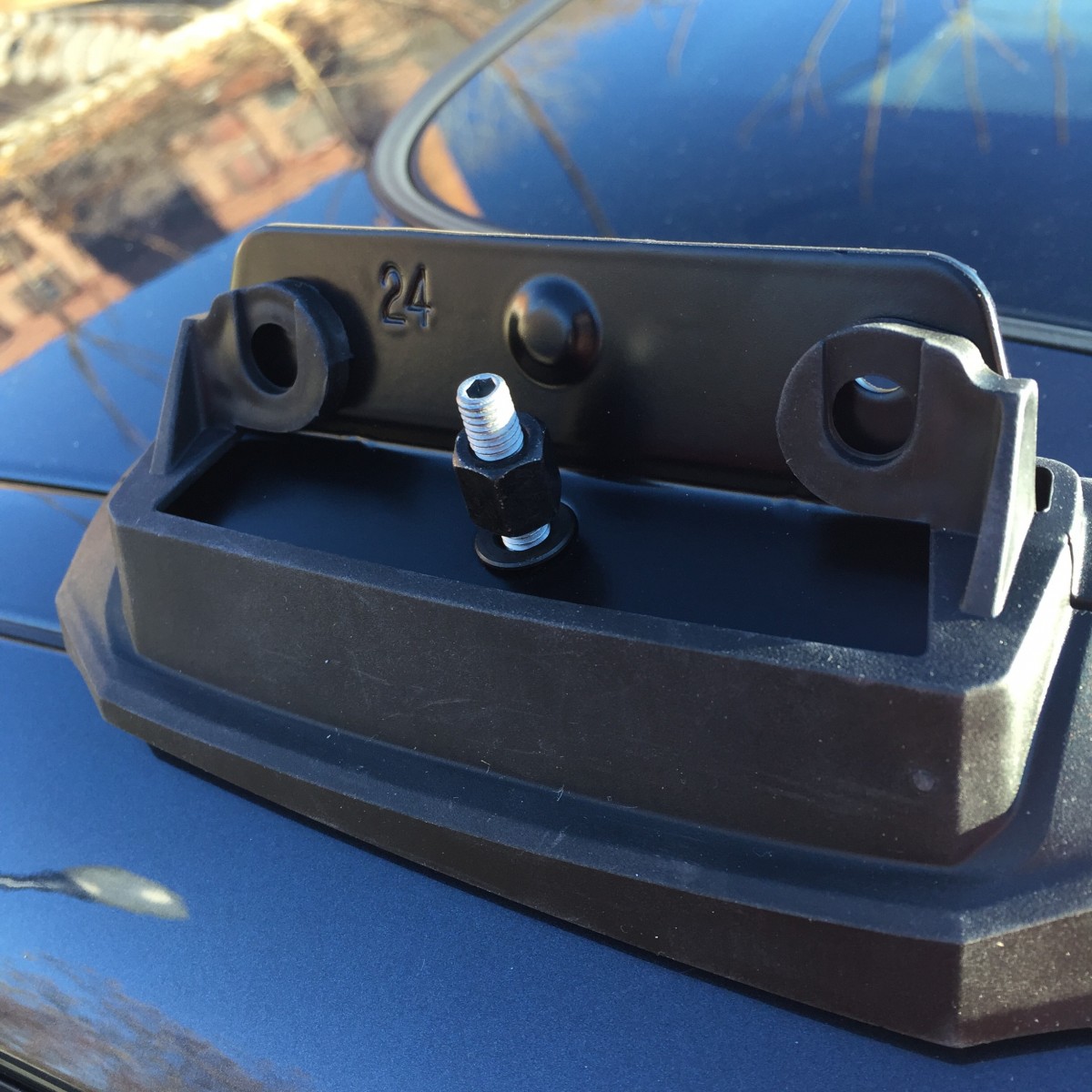
Once those bolts are in, make four of these:
The metal bracket snaps into the larger piece.
Place them on the bolt, with the “24” facing you, so that the back angles away from you. Secure it with a washer and nut from the package. Also, place the rubber boot over it, like so:
The rubber should sit between you and the metal post.
Note that the rubber pieces have separate shapes for front and back. One will obviously fit and the other won’t.
Note that this whole assembly is going to look ridiculously crooked. That’s normal; the other pieces are angled to make it all work. I never got the rubber boots to sit quite flush.
Partly assemble the load bars
All you should do at this point is put the long rubber strip in the top. Note that it has little feet that snap into the channel. Don’t attempt to thread the whole thing inside. (If that last sentence means nothing to you, that’s good; it means your mind didn’t even conceive the bad idea I had for how it was supposed to go together.)
Do not put the end caps in the box on yet; they’d just be in the way for the next step.
Attach the Rapid Podium mounts to the load bars
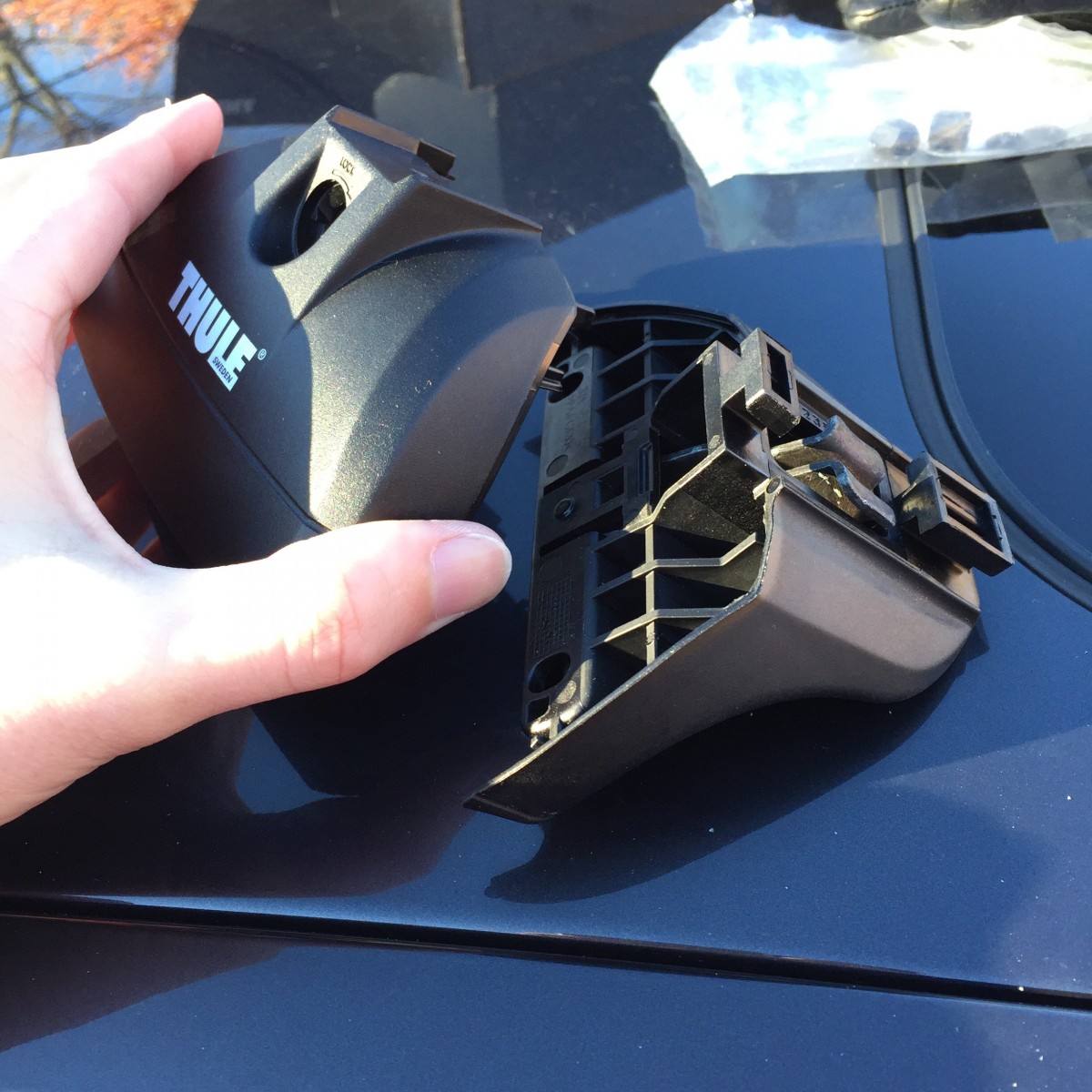
When you take these out of the box, there are two parts held together with tape. Remove the tape, and separate them.
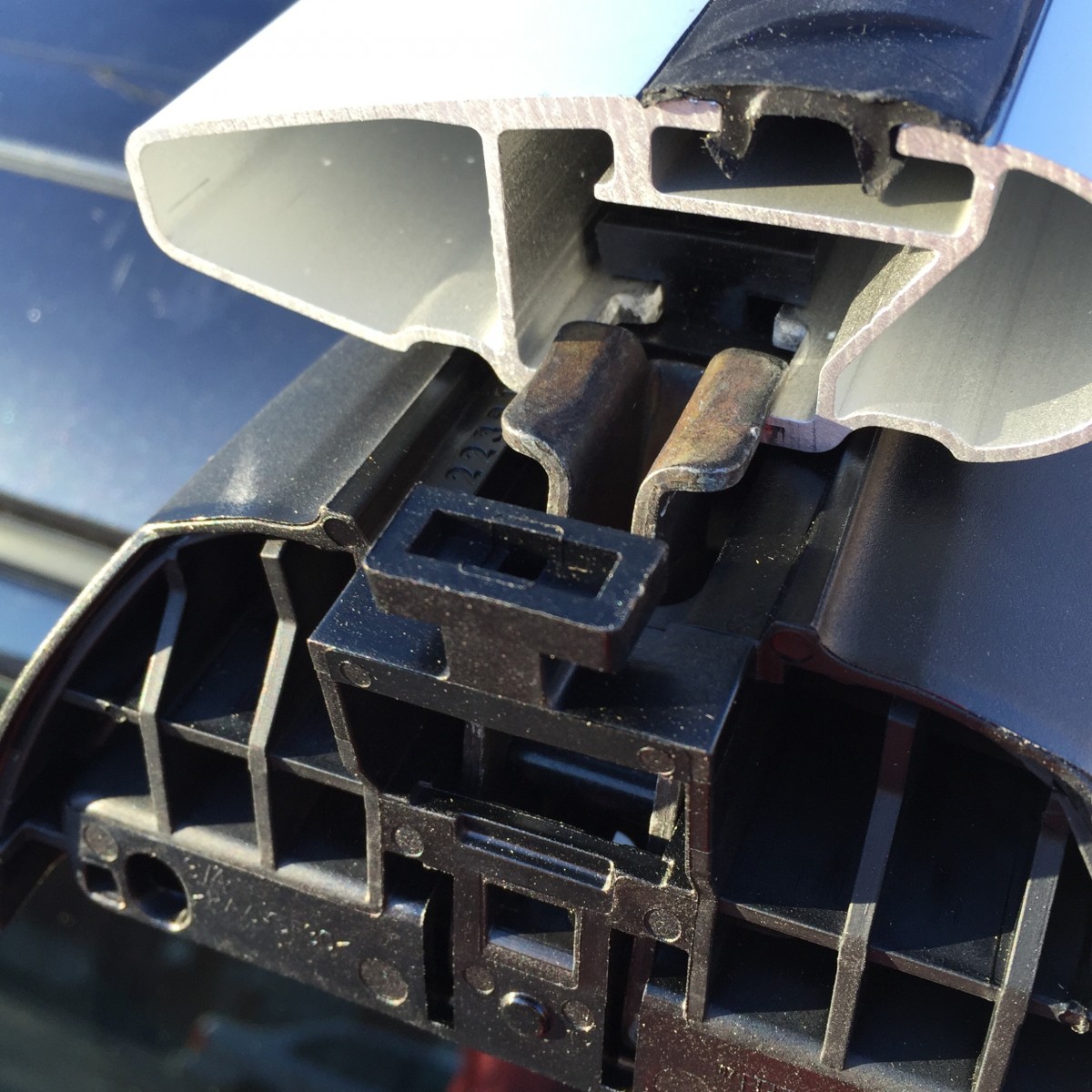
You want the part I’m not holding in the picture. The base will slide into the load bar like so:
The underside of the load bars has an adjustable piece to set how far in the mount goes. I only needed to push it in 2-3″ on each side to get it to fit. The goal is to put the podium mount on each side, and get them loosely matched to fit the bases you installed previously. You’ll quickly find that the podium mounts don’t always want to move. There’s a locking mechanism. Looking at the underside of the bar, it’s this thing:
Pull that inward (towards the center of the bar) to allow it to move; push it out to lock it in place. The nice thing is that it keeps things from falling apart as you maneuver it.
Your goal right now is not to get it mounted, only to size it appropriately. It takes a bit of fiddling, especially trying to make it proportional. Mine ended up a little off-kilter. It bothers me a lot, but not enough to take it off and do it again.
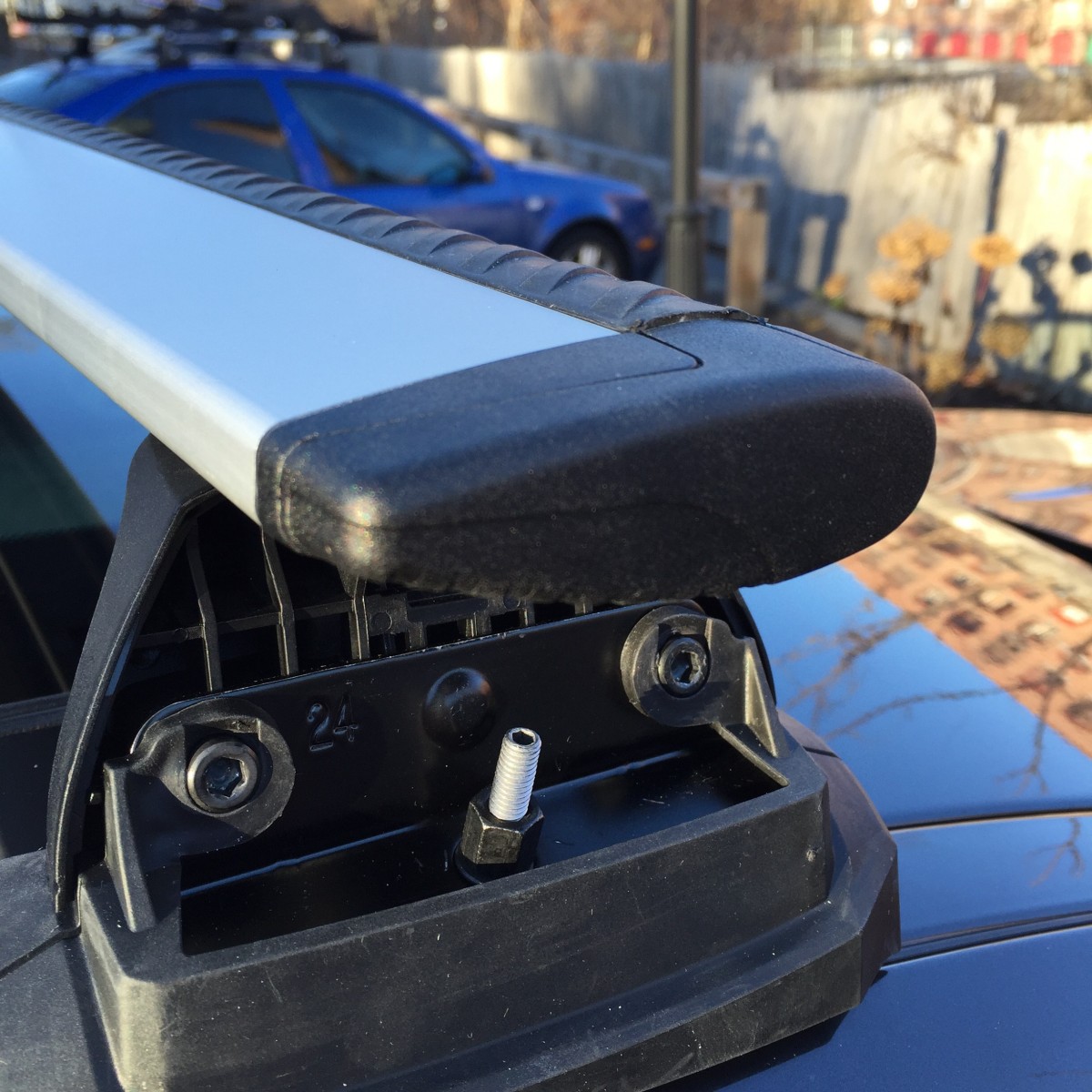
Note that the Rapid Podium pieces only come to the inside of the vehicle mount; they don’t sit on top of it. Like this:
Don’t put the bolts through yet, however. All you’re doing right now is a dry fit to get the mounts set at the right points.
Mounting the bars
You should basically be at the above step, minus the bolts. So now, go to install those bolts.
This is by far the most frustrating step. It took 70% of my time and caused 90% of my irritation. If you can’t get the bolts to thread through, I found it easiest to just cast the whole bar/podium aside and put the bolts in first:
Then try to mount it. I still had trouble on a couple of them, which led to yet another strategy. I removed the metal bar from the inside entirely:
Then I ran the pushed through from the car mount to the podium, and then worked on sliding the metal bar back in and getting the screws to thread.
Unless you’re some sort of natural maskiningenjör, this process is going to take a while before everything begins to thread together. Once you get one of the two bolts to start to go, don’t turn it much! Immediately get the other one to thread in. Otherwise you’ll just never get it.
I found, from experience, that if I didn’t get it after a few attempts, it made the most sense to take apart and start over. Sometimes it took several tries, but aimlessly jiggling and shoving things didn’t help anything at all. Try to remain välbalanserad for this.
Also, keep count of how many times you drop a screw on the ground. A true Swede will number fewer than 20; I did not. And I dropped the wrench even more.
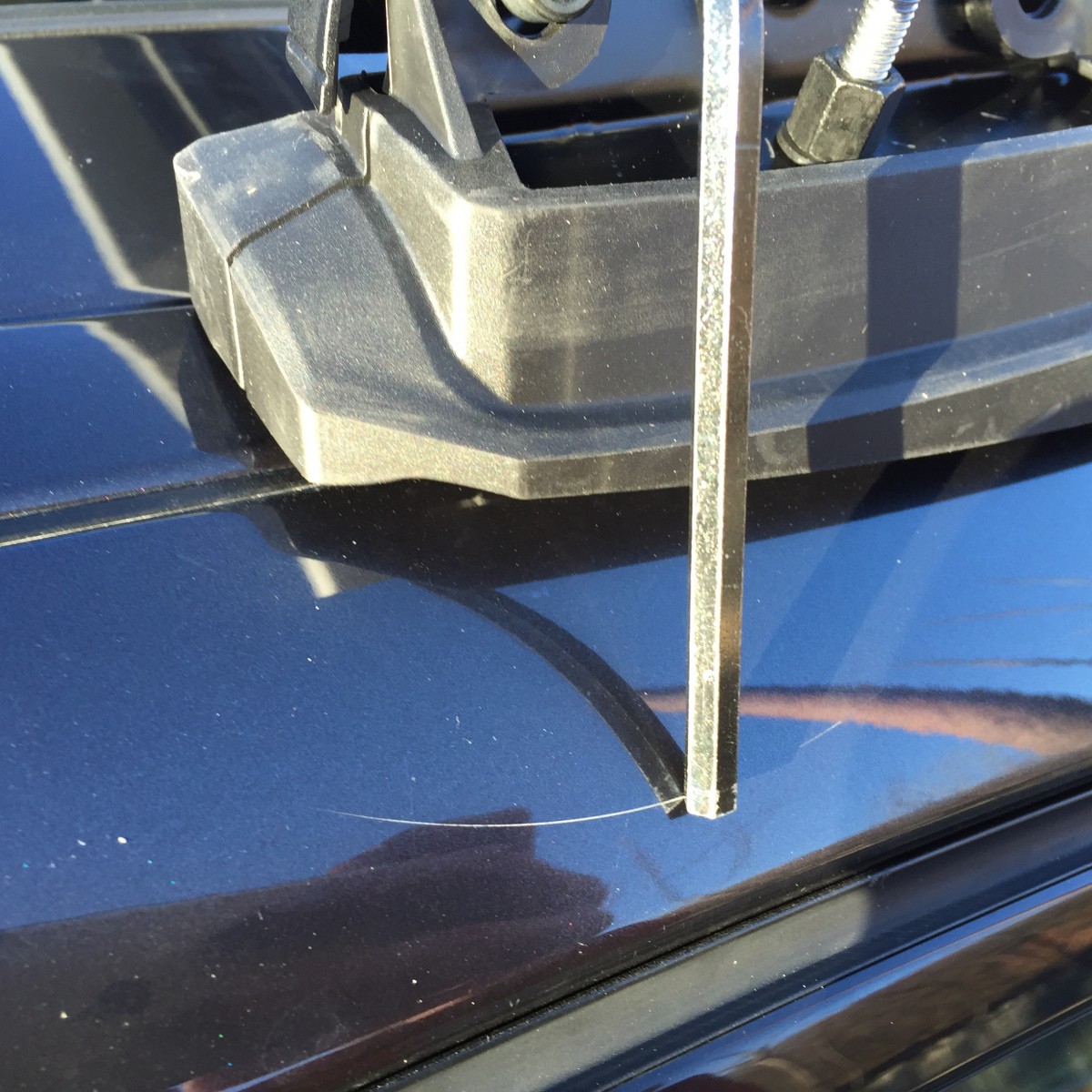
Oh, and watch out for this—it’s easy to scratch the paint with the wrench:
The good news is, I had just ordered a bunch of stuff for detailing and getting other scratches and swirl marks out, and I believe this will polish out pretty easily. But that’s the subject of a later blog post!
Once you get this step done, you’re 98% of the way there. The rest is a breeze!
Install the caps
Remember the other half of this? The part I’m holding? Now, you just need to install that.
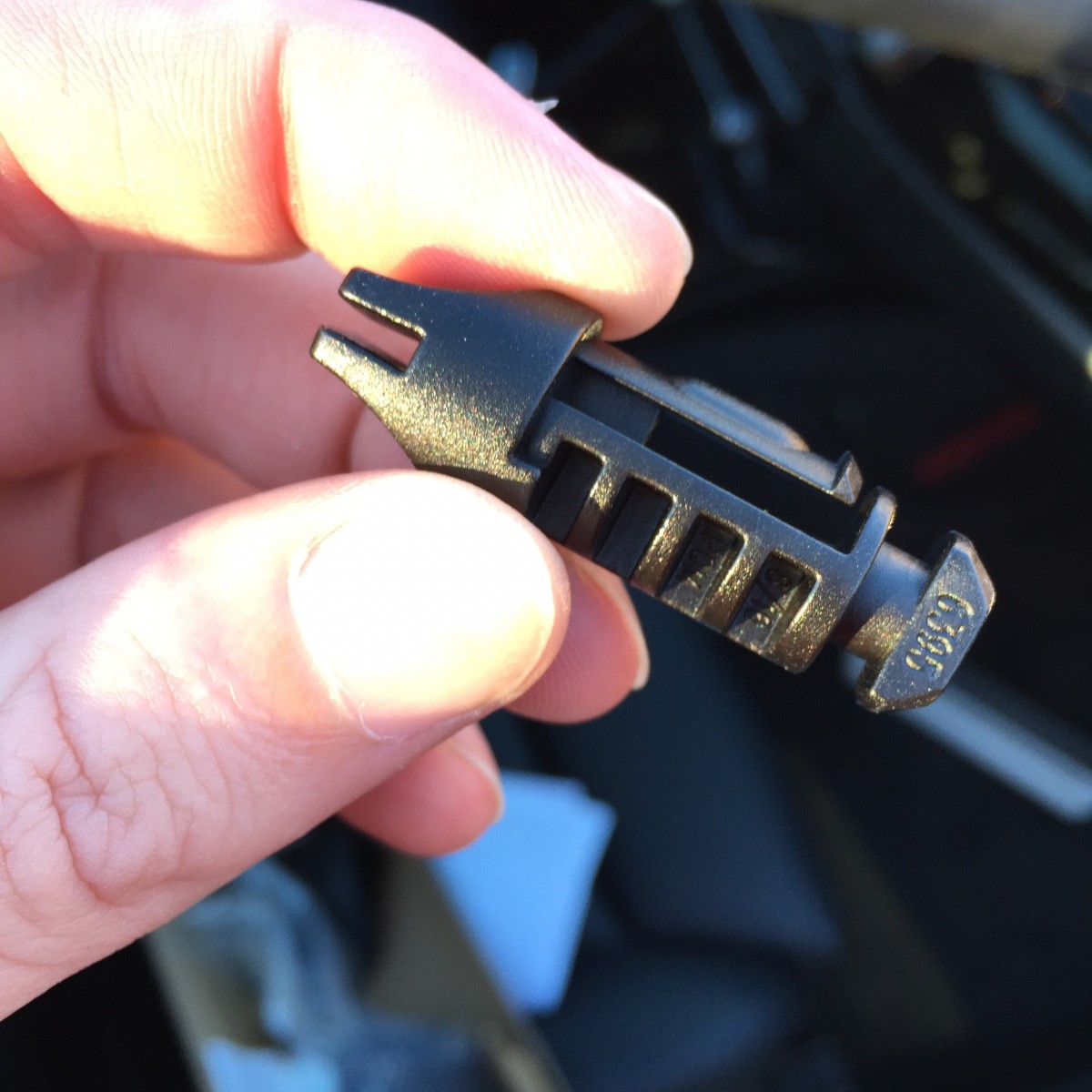
It just slides into place. Then you use these key-like things to lock it in:
If the slot is vertical, it’s open. Turn it clockwise to a horizontal position (I used a knife blade because that’s what I had in my tool box, but I suspect a coin would work well too) to latch it. Give it a tug to make sure it’s actually latched.
You are done. Hooray!
Perhaps the experience has left you wishing to learn a little Swedish?